Understanding the basics of IRAs

IRAs are an excellent, and often underused, tax wrapper that can play a valuable role in your tax-planning strategy. While there are restrictions on how and when they can be used, their complexity means many people overlook what could be a significant opportunity. In this article, we explore the benefits of IRAs and the different rules that apply to each type.
What is an IRA?
An Individual Retirement Account (IRA) is a tax-advantaged personal savings account designed to help individuals build retirement funds. IRAs offer significant tax benefits and flexible investment options.
Whether you are starting your first retirement account or looking to fine-tune your savings strategy, understanding the fundamentals of IRAs is a crucial step toward long-term financial security.
Why do IRAs Matter?
IRAs allow your investments to grow with special tax treatment. Depending on the type of IRA you choose, you may benefit from:
- Tax-deductible contributions
- Tax-free withdrawals in retirement
- Tax-deferred growth
- Potential eligibility even without employer plans
Given that Einstein said compounding is the 8th wonder of the world it (link to other article) seems remiss not to take advantage of.
Types of IRAs
The following matrix summarizes the most common types of IRAs and their defining features:
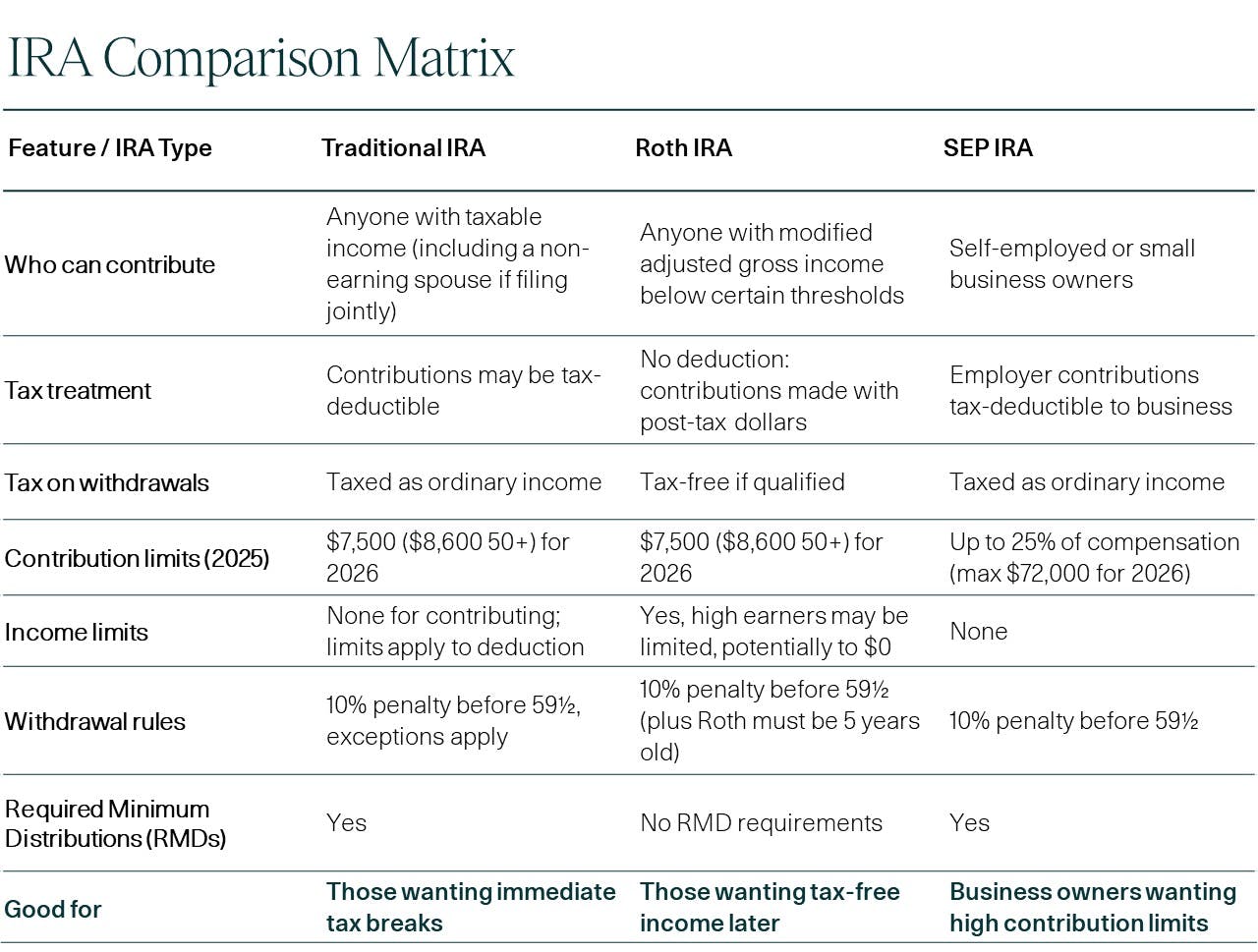
Source: W1M
Choosing the Right IRA
There are lots of factors to consider when selecting an IRA, consider:
- Your current vs. future tax bracket
- Income eligibility
- Employment situation
- Desire for employer contributions
- Need for flexibility
Many people use more than one type of IRA throughout their working lives to take advantage of different tax and savings opportunities.
IRAs are powerful retirement tools offering tax benefits and investment flexibility for individuals and small businesses. Understanding the key differences, summarized in the matrix above, can help you choose the right account and build a more secure financial future.
This material is provided for informational purposes only and does not constitute tax, legal or financial advice and should not be relied upon as such. W1M and our affiliates do not provide legal or tax advice. Investors should consult their financial and tax advisors to assess the tax implications of any investment. Tax treatment depends on the individual circumstances of each client and may be subject to change in the future.
The views expressed reflect current market conditions and are subject to change without notice. Any references to taxation are based on current understanding and may change.
This material is provided for informational purposes only and does not constitute investment advice or a recommendation. It should not be considered an offer to buy or sell any financial instrument or security.
Any investment should be made based on a full understanding of the relevant documentation, including a private placement memorandum or offering documents where applicable.
W1M Wealth Management and its affiliates do not provide legal or tax advice. Any references to taxation are based on current understanding and may change. Investors should seek independent tax advice tailored to their individual circumstances.