The Iran conflict and market implications - from the Multi-Asset desk
In this article, James Mee, Co‑Head of Multi‑Asset, sets out the Multi‑Asset desk’s perspective on recent market developments and how these views have been reflected in the W1M Multi‑Asset Funds.
On the Multi-Asset desk, we view the US/Israel attack on Iran through the prism of US-China relations and their battle for geoeconomic dominance. Given the predictably low likelihood of an energy detente with Russia, and following a successful coup in Venezuela, the US administration turned to Iran the other major oil provider to China. Control of both Venezuelan and Iranian crude exports would provide Trump leverage ahead of his (now-delayed) meeting with Xi Jinping at the end of March (now May). Oil for critical minerals.
If this is the correct framework, the incentives for Trump to exit stage left are now considerable. He has not achieved control of Iran’s energy and will not do so without putting boots on the ground. Such an action would be politically unpopular and the antithesis of what he campaigned on. Such a volte face is not beyond the realms of possibility of course, and particularly for this President, but a ground presence would almost certainly extend beyond the November mid-term elections and see oil and related refined product prices higher again. Another war in the middle east, recession and inflation. Popularity and market performance are important to this President, and we can already see an exit narrative forming: “we achieved our limited military objectives and forever ended Iran’s ability to build a nuclear weapon”. But intransigence and ego are balancing factors, and, as we saw on April Fool’s Day, he is not beyond rationalising his actions (keep this war in perspective – compare it to WWII’, he suggested…).
Incentives for Iran to immediately end the war are less obvious. After the initial attack, what remained of the Iranian leadership immediately dispersed, and decision-making was decentralised to those closest to the action – more often than not to ICRG commanders, engendering a robustness to the Iranian military position which makes regime change vanishingly improbable. The theocracy does not answer to its people in the same way the President must, and they are not yet facing meaningful civil unrest, in part for fear of repercussion following the brutal suppression of the January demonstrations, and in part because the attacks have hardened views and established a Blitz mentality. It also pays to remember that the newly appointed head of the regime lost is father, his wife and his child in the initial attack. These are powerful social and emotional forces. Clausewitz wrote that without public support or emotional drive, war cannot be sustained. It appears from the outside that Iran has both while the US has neither. As we noted early on in the war: Iran doesn’t need to beat the US military, they just need to beat the US Treasury market.
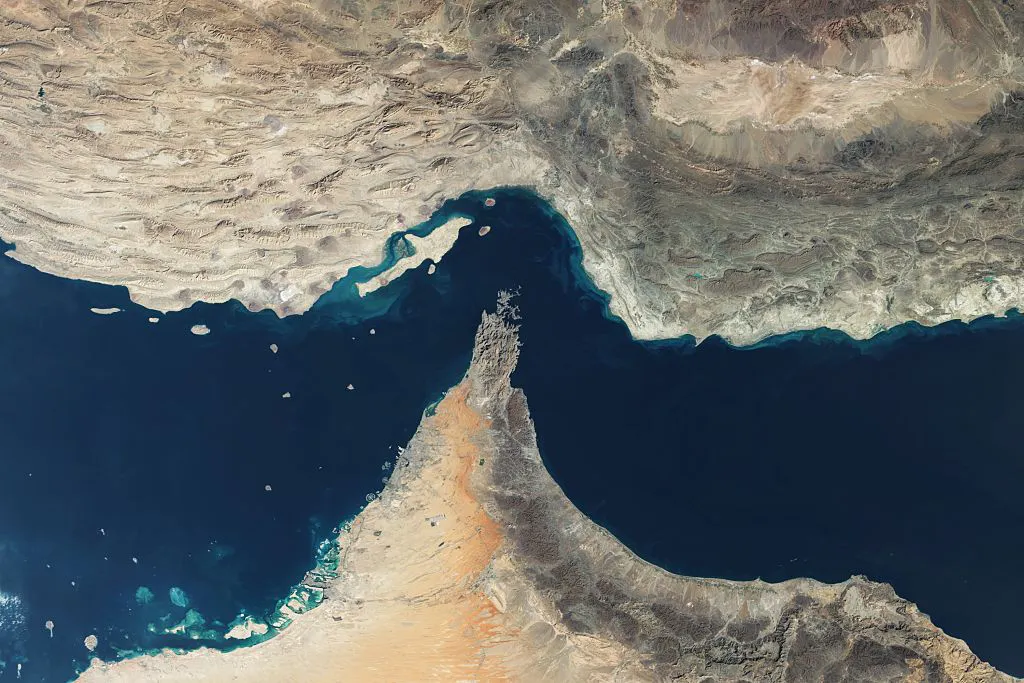
If this analysis is correct, Trump now has two options: (1) unilaterally withdraw from the war and the region or (2) put boots on the ground and see the war to a new set of objectives. Whatever he decides, the attack on Iran has proven to be a substantial strategic miscalculation. It was not as swift as it appears he hoped it would be (a miscalculation in itself: for some, ideological conviction trumps economic interests); he has shown the limits of US hard power (and by extension done damage to the US’ soft power); he has upset the balance of powers in the Middle East and, without further action from non-US allies, very likely handed Iran de facto economic control of the Strait of Hormuz; his actions have led to higher energy prices, higher inflation and likely slower growth, and he will go to China to negotiate for a better deal without the leverage he so clearly needs. Whether this failure has emboldened China re: Taiwan or Russia re: the Baltic states remains to be seen. However, that very question, combined with the reminder of the importance of energy independence, will likely re-focus Western government attention on both defence and energy security & infrastructure.
At the time of writing, the market believes the hostilities in Iran will result only in mechanically higher inflation and little impact on growth. A rate shock, not a growth shock.
Brent oil is up +52%, jet fuel +130% and European gas prices +57% (though note US gas prices are down – the power of energy independence…); distillates (diesel and others) +60% or more; urea (feedstock for fertiliser) also up +50% since the beginning of the war and world container rates are up +20%. Applying higher energy prices to the energy component within CPI leads to a “mechanically” higher inflation rate, something central bankers typically look through, all else equal. However, the impact of the war is broader than just energy, and the various price shocks come at a time where US CPI was already ticking-up. Indeed, we took 3% out of equities in the Multi-Asset Income Fund ahead of the war, in part, for this reason.
We know from speaking to companies and our small business network that some merchant businesses in the UK immediately hiked prices 7-12%, citing the war, and note the latest PMI data, whose Prices Paid component suggests higher prices through February and March. This sustains a trend of companies pushing prices up in January, passing on higher import costs courtesy of tariffs and a weaker dollar – perhaps more comfortable doing so in January while the economy was firing on all cylinders; perhaps now attempting to get what they can ahead of an inevitable rise in their cost base. These higher prices must be absorbed somewhere.
Higher short term inflation expectations have seen rates price higher and central banks take a hawkish turn relative to their broadly dovish overtures pre-War. The central question for markets at this point is: will this backdrop transition to a growth shock?
If this is to happen, we should start to see signs of this in Q2. The transmission mechanisms of higher oil & energy costs into weaker growth are primarily: (1) a decline in real consumer incomes (leading to a reduction in consumer demand as proportionately more of their income gets spent on energy and related costs); (2) business cost inflation, resulting in a squeeze on margins or higher consumer prices; (3) monetary policy tightens, most likely in the form of higher rates (their reaction function is now focused on inflation expectations: for as long as these remain anchored at the 2-5Y point, we expect rates will remain flat at this level and central banks will look through the energy-related price noise); and (4) supply side rationing (which would limit the ability of the economy to grow). We are seeing some of these in some regions, but by no means all in all. As has been repeated many times since the start of hostilities, whether we see a growth shock will depend in large part on the duration of the war itself.
If we do not see a material slowing in growth (or a recession) then nominal GDP growth will likely be strong this year, given higher consumer prices. Higher nominal growth typically drives higher earnings, which in turn ultimately drive equity prices. Indeed, earnings expectations for 2026 have (amazingly) risen since the start of the war. Rising growth estimates, improving valuations and a (slight) re-set of investor sentiment (if not positioning) give us caution in reducing risk exposure further at this stage. As ever, we take a pragmatic approach to capital allocation, reacting to information in incremental adjustments to the portfolios. In the Multi-Asset Funds, we continue to run the underweight equity and lower duration positioning.
Past performance is not a reliable indicator of future results. The value of investments and the income derived from them may rise as well as fall, and investors may not get back the amount originally invested. Capital security is not guaranteed.
This material is provided for informational purposes only and does not constitute investment advice or a recommendation. It should not be considered an offer to buy or sell any financial instrument or security. Any investment should be made based on a full understanding of the relevant documentation, including a private placement memorandum or offering documents where applicable.