Real Assets, Power and AI
There are many factors impacting markets, as always. US equities have been outperformed by European and Emerging Markets stocks last year and this year so far. Currency matters and the direction of the USD might matter most. Will the market broaden with the equal weighted index sustaining outperformance over megacaps with high valuations. Technology stocks may not be the only game in town; the Nasdaq in sterling terms is down this year. Electricity demand is growing and not just because of AI data centres. Trade wars, tariffs, upward pressure on wages perhaps exacerbated by immigration policies, all add to inflation risks. Investors need inflation resilience but also want less exposure to fiat currency debasement when “money printing” has been used extensively this century. As we progress through 2026, multiple cases for exposure to Real Assets can be made.
We need more energy… and cleaner energy… not just for AI
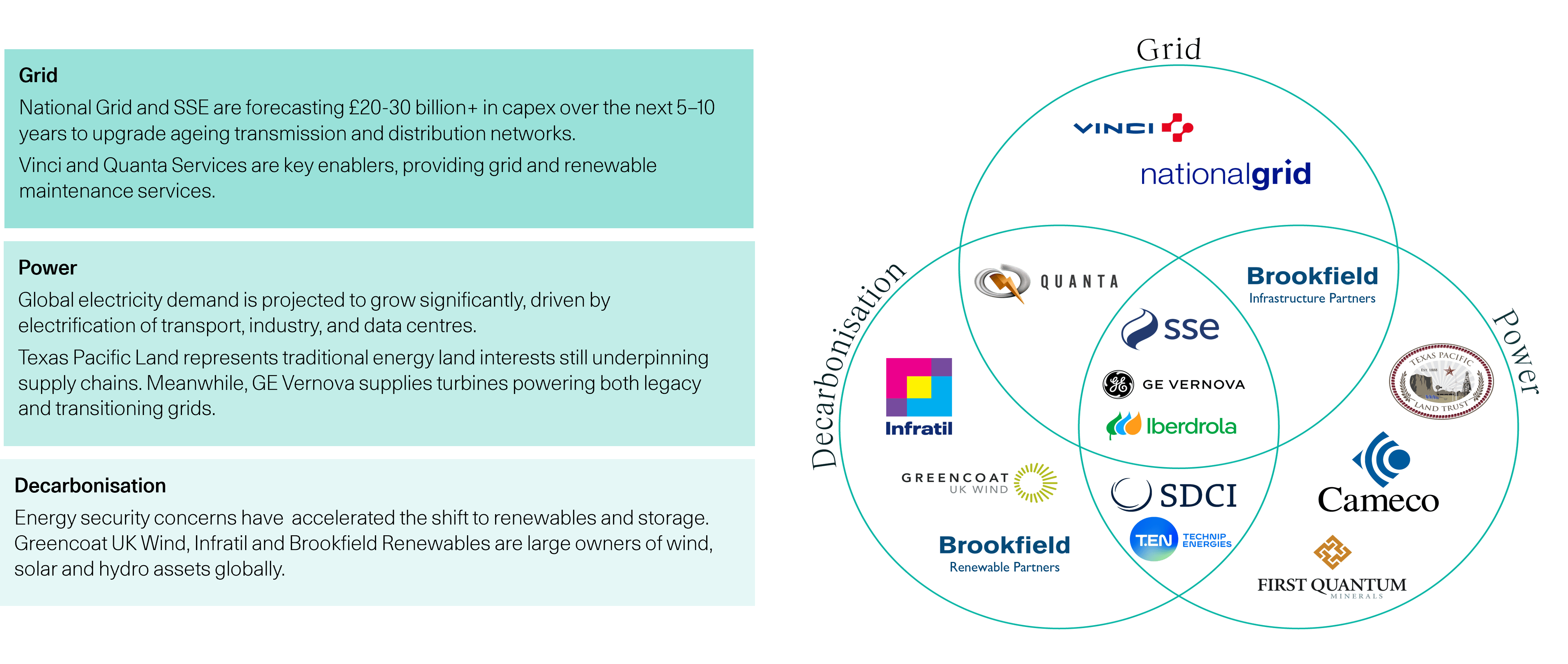
Within the (W1M) Waverton Real Assets fund, there is exposure to long-term themes across power generation, electricity grid investment needs and decarbonisation targets. As we move to hybrid / electric cars, more electricity is needed, obviously. Investment is needed in grids to meet increasing consumer demand; National Grid and SSE forecast £20-40bn+ in capex is needed in the UK in just the next 5-10 years. Investment is also needed in other core infrastructure areas such as roads, bridges, hospitals and schools. AI data centre power demands are, also, massive and have even led to Microsoft signing a contract for nuclear power generation specifically to meets its corporate needs. Leading uranium mining companies, like Cameco, are well positioned given nuclear energy is considered relatively clean. The needs for more power generation is obvious. That power must also be cleaner as the world commits trying to limit emissions and impact on the environment and climate. Our Real Assets fund has exposure to both traditional and renewable energy companies.
Investing in the future – power, grid, and decarbonisation
Positioned across key areas benefiting from power demand, grid modernisation, and the renewable buildout
Source: W1M. As at 31.12.25
Risk warning: The above is for example purposes only and should not be considered a solicitation to buy or sell a security. Differing market conditions may mean the above weightings will decrease or increase tactically.
The USA and Europe have ageing infrastructure and power generation assets. Even before new investment for AI datacentres is considered, massive capital expenditure is already needed.
New infrastructure investments are needed
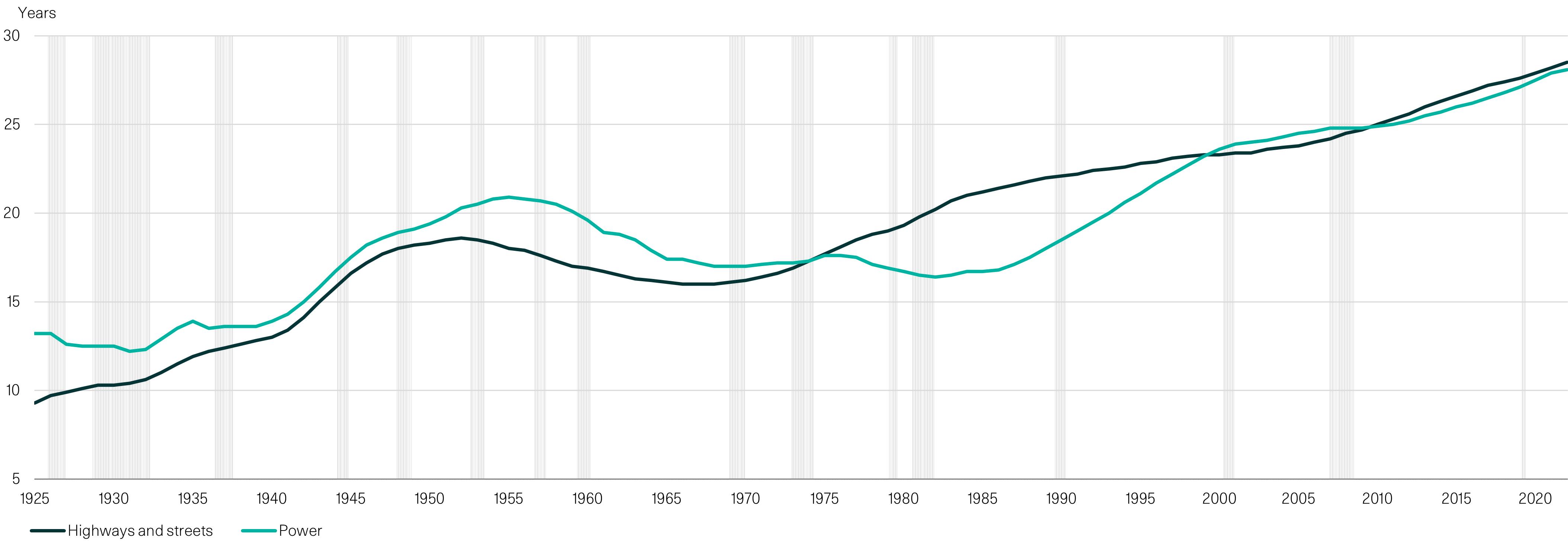
Before contemplating the opportunity set in new data centres or renewable assets, the existing infrastructure in the US has never been older. This is a similar picture in Europe and the UK. We therefore see a critical need for new investments on a replacement cycle, which will have to be partly funded by private capital given the stretched government balance sheets.
Average age of US Government fixed assets
Source: BEA, Apollo Chief Economist. As at 31.12.25.
In a world with strong demand drivers (electrification for transport and manufacturing) and with net zero policies adopted by most of the largest economies, there is a huge opportunity for companies benefiting from literally hundreds of billions in investment annually to come globally over the next quarter of a century.
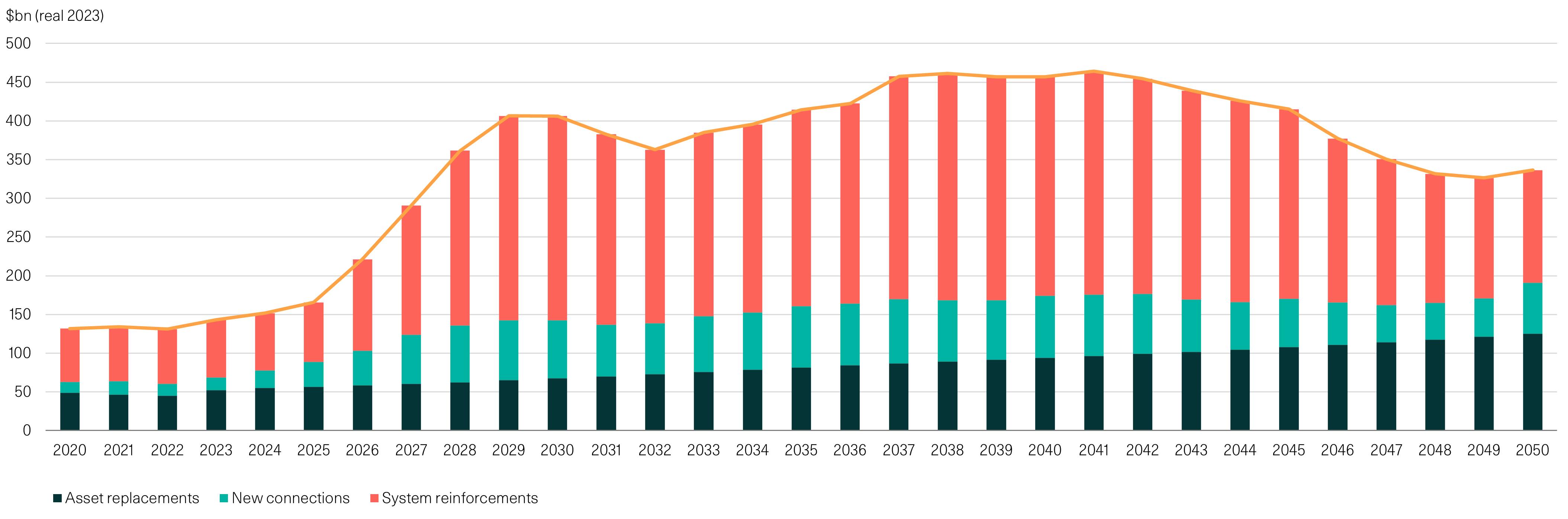
Transmission grid investment outlook, 2024-2050
Be it either digital assets for the AI build out or new power assets to service an evolving grid as it evolves from centralised to decentralised, the transmission of energy from source of production to end consumer is vital. The quantum of growth that is expected in the transmission grid, with the exponential move higher in the remaining five years of this decade, is particularly relevant for the current opportunity set.
Transmission grid investment outlook, 2024-2050, Net Zero Scenario
Source: Bloomberg NEF New Energy Outlook 2024, Apollo Chief Economist. As at 31.12.25.
The ‘revenge of the old economy’
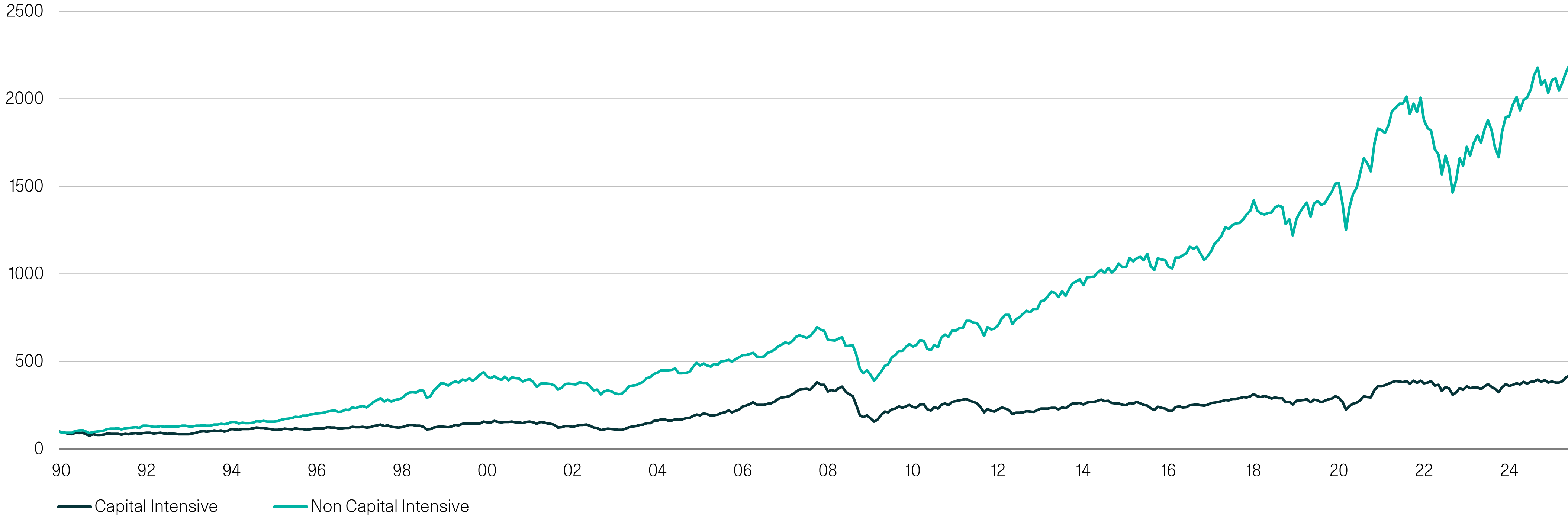
Technology stocks started the century with a dotcom boom, had a bust and then recovered strongly driven by themes including AI most recently. One attraction to tech has been that it has been “low capital intensity”; huge factories and investment have not been needed. A relatively small number of technology savvy entrepreneurs could produce software which has generated billions in revenues. Investing for a decade in pharmaceutical R&D and factories or, even “worse”, sinking billions into trying to mine gold, copper or uranium could look unattractive compared to investing in a low capital intensity business like Microsoft, for example. Many capital intensive businesses have been starved of capital as a result. But, if the world needs more power generation and investments in infrastructure, the “old economy” might have to be the recipient of much more capital. This provides opportunities for active, global investors.
World Capital vs Non-Capital intensive. Price returns (USD)
Source: Datastream, Worldscope, Goldman Sachs Global Investment Research 31.12.25.
Conclusion: Real Assets provide real opportunities for investors
The W1M real asset strategy looks for ‘unique assets” which exhibit sustainability combined with a long-term competitive advantage plus predictable revenue streams and growth potential. Growth doesn't necessarily have to come from volume; pricing power can significantly enhance profitability. The investment merit in real assets is not short term ‘growth’ but in the long-term compounding of earnings over time. Investments can be negatively impacted by regulation or over-leveraged strategies, but if correctly managed and operated, inflation linked, contracted revenues are a powerful long term tailwind to earnings, cash flow and thus dividends.
The resources sector seems somewhat overlooked and provides some very attractively priced long term opportunities whether in copper miners or the resurgent nuclear industry. Gold has had more attention recently but still is interesting in our view given its inflation resilience and as a hedge against currency debasement. However, the market cap of the mining sector has declined as a percentage of global market cap, yet many of the raw materials produced are vital to a functioning global economy and its technological development. Years of underinvestment in the mining sector creates opportunities for investors who see companies now facing greatly increased demand to meet current metals demand, let alone the surge expected from AI development, defence modernisation, and advanced manufacturing.
Past performance is not a reliable indicator of future results. The value of investments and the income derived from them may rise as well as fall, and investors may not get back the amount originally invested. Capital security is not guaranteed.
This material is provided for informational purposes only and does not constitute investment advice or a recommendation. It should not be considered an offer to buy or sell any financial instrument or security. Any investment should be made based on a full understanding of the relevant documentation, including a private placement memorandum or offering documents where applicable.